
The therapy
Leveraging its platform, StemInov has developed WhartSep® treating severe community-acquired pneumonia (CAP) associated with ARDS and sepsis


A Wharton-jelly mesenchymal stem cell therapy
THERAPY
The only treatment for severe Community Acquired Pneumonia (CAP) worsening to ARDS and sepsis in ICU settings
1 treatment, 3 actions
- Immunomodulatory
- Anti-bacterial
- Lung protective
Phase IIa-ready by Q1-2027
Documented safety,
no clinical Phase I needed
Promising results in 3 preclinical models (mice, rabbits, pigs)
- Better survival
- Decreased inflammation
- Lung protection
- Decreased bacterial load
1 patent




ARDS: Acute Respiratory Distress Syndrome
Severe Community Acquired Pneumonia (CAP) & clinical rationale
Severe CAP can progress to ARDS or sepsis with high-mortality in ICU settings
The disease escalates fast : current care is only supportive
Moderate pneumonia
Fever, cough, dyspnea
Severe pneumonia
Lung inflammation, rising O₂ need
Worsening hypoxemia
High risk of ARDS
ARDS / sepsis
Bilateral lung failure, organ failure
Recovery or death
35–45% mortality1, long sequelae
Care pathway
Medical Ward
Emergency Dept.
ICU (Intensive Care Unit)
ICU / Out-patient
Antibiotics throughout the care pathway : but no targeted therapy addressing the immune cascade
WhartSep® positions in ICU Settings
i.v. injections within 48h of hospitalization : acting on inflammation, infection and tissue repair before the cascade turns fatal
✓ Prevent progression
✓ Reduce mortality
✓ Shorten ICU course
1 Epidemiology, Patterns of Care, and Mortality for Patients With Acute Respiratory Distress Syndrome in Intensive Care Units in 50 Countries
Severe CAP is a life-threatening disease with high mortality
A severe disease devastating lungs
> Severe CAP often worsens into ARDS, sepsis or septic shock
> Fluid leaks into the alveoli, causing lung stiffness and impaired oxygen transfer
> Can rapidly progress in ICU¹ to mechanical ventilation, multi-organ failure, and death
A high burden, mortal disease
> ~1.4M cases globally
>30 to 45% mortality rate
>Market estimated at $1.3bn (2033)2
>€30k (EU) / $71k (US) estimated cost per patient
Supportive current standard of care
> Current standard-of-care relies only on mechanical ventilation to maintain oxygen levels and antibiotic therapies
> Extended ventilation can increase complications and lead to long recovery and persistent symptoms
> There is no targeted therapy addressing the immune cascade
Significant unmet medical need
2 Data Bridge Market Research : $3.3B CAP drug market, and severe CAP representing 40% of cases
WhartSep® aims to reduce mortality of patients with severe CAP associated with ARDS and sepsis
Clinical Trial Highlights

POPULATION
Patients with severe CAP associated with ARDS or sepsis
- Treated with antibiotics and vasopressors
- With ventilation support

ADMINISTRATION
Mode
- IV route on top of antibiotics
Duration
- 3 consecutive daily injections

EFFICACY
Mortality
- All-cause mortality rate at Day 28 and Day 90
Lung function
- Ventilator dependence
- Lung function measure
Infection control
- Bacterial clearance
- Secondary infections
Hospital stay
- ICU and hospital length of stay
Mode of action in the lung
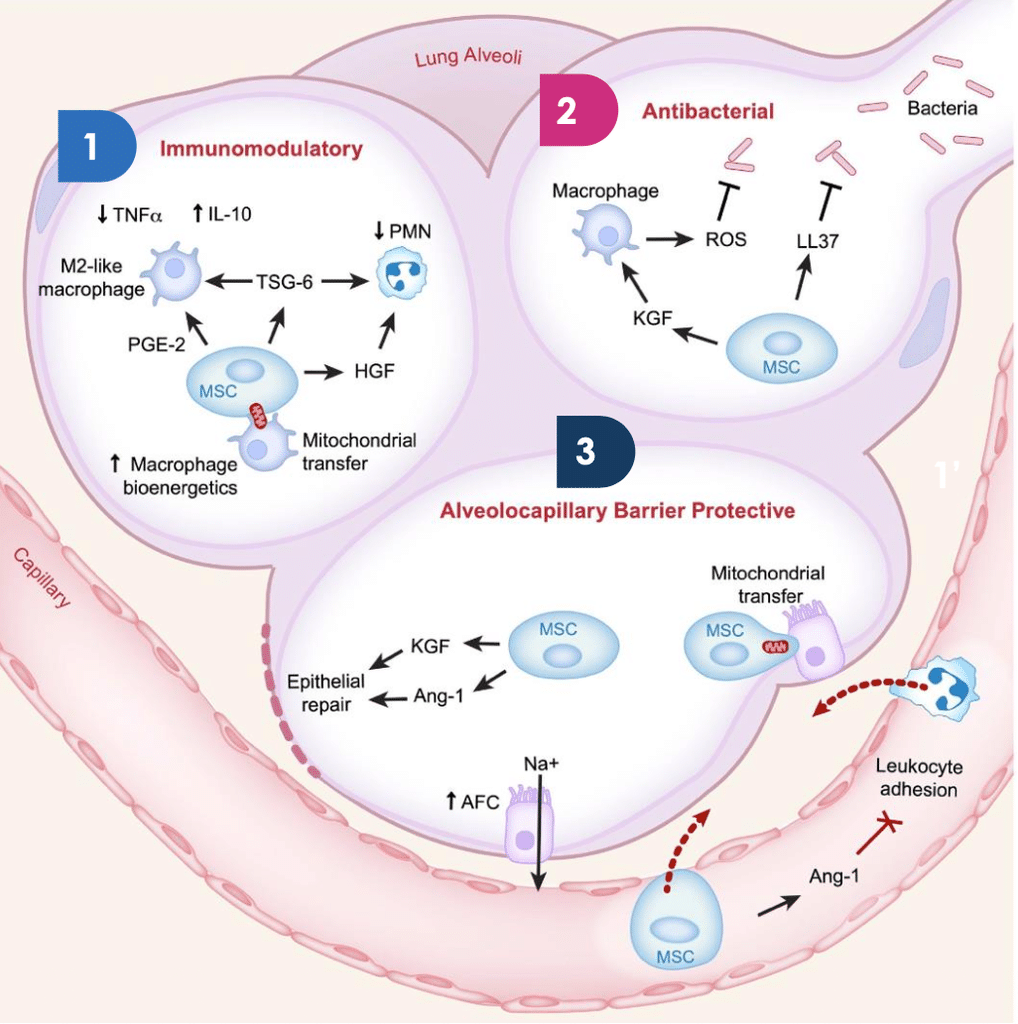
WJ-MSCs are trapped in lung alveoli after i.v. injection, where they secrete signals to tackle the root cause of modulatory inflammation and bacterial persistence
Promises and challenges of personalized medicine to guide ARDS therapy, Critical Care
https://link.springer.com/article/10.1186/s13054-021-03822-z
WJ-MSCs are trapped in inflamed lung alveoli
WJ-MSCs dial down destructive immune responses by shifting pro-inflammatory signals (TNF-α, IL-6, M2-like macrophages) toward healing ones (IL-10, PGE2, TGF-β), preventing further damage and cytokine storms
Simultaneously, WJ-MSCs deploy antimicrobial peptides directly against bacteria, boosting macrophage phagocytosis to clear infections
WJ-MSCs transfer healthy mitochondria to stressed lung macrophages and epithelial cells, restoring energy production and fluid balance, which helps to rebuild the alveolar-capillary barrier
They also limit harmful neutrophil and leukocyte adhesion, minimizing scarring and fibrosis and promoting epithelial repair
Preclinical results

WhartSep® improves survival, enhances bacterial clearance and reduces lung inflammation in mices
HIGH SURVIVAL RATE
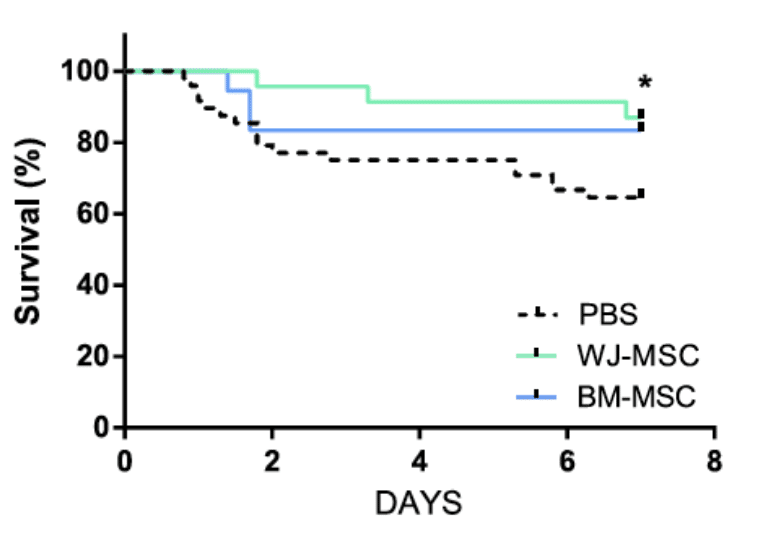
› Better survival in mice receiving MSCs
› Better survival with WJ-MSCs than BM-MSCs
BACTERIAL CLEARANCE
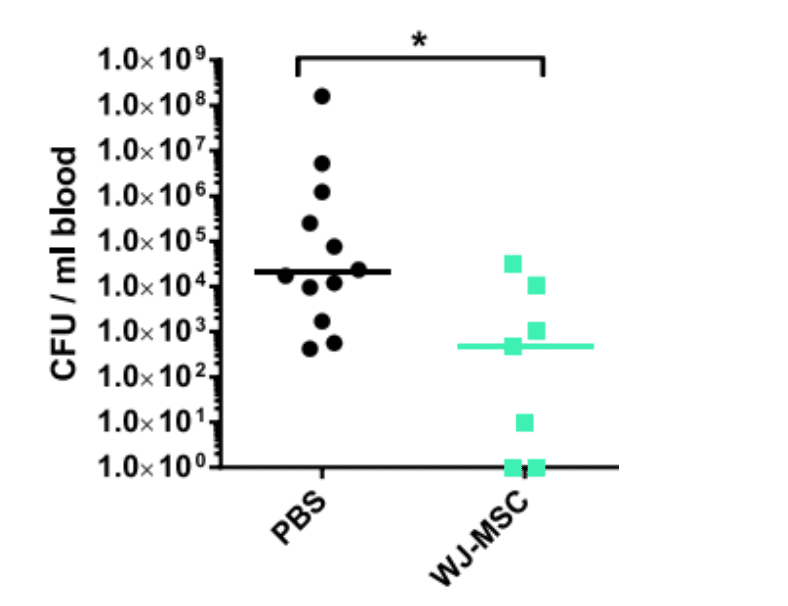
› WJ-MSCs enhance significantly bacterial clearance in both blood and spleen
LOWER INFLAMMATION IN LUNGS
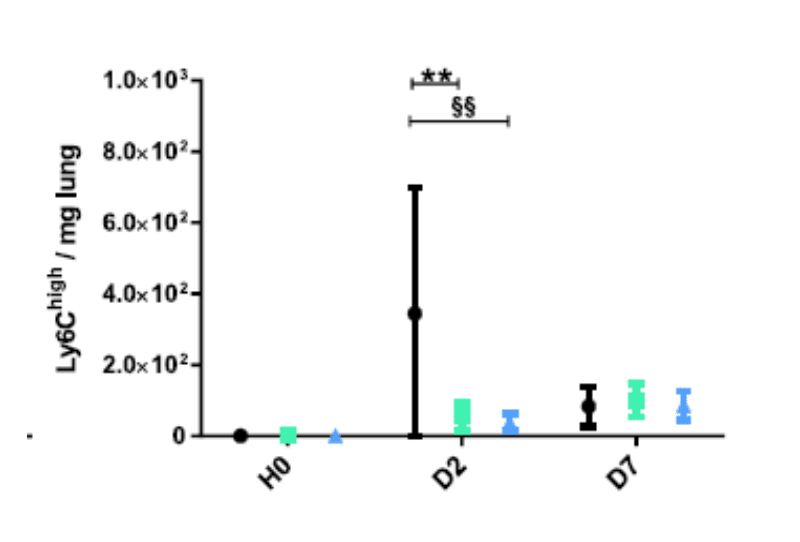
› Significant decrease in neutrophils in lung
› Inflammatory monocytes decreased significantly in lung at D2
Sepsis mice model
Laroye et al. 2019

WhartSep® showed strong efficacy, enhancing survival and lung protection in pigs
HIGH SURVIVAL RATE
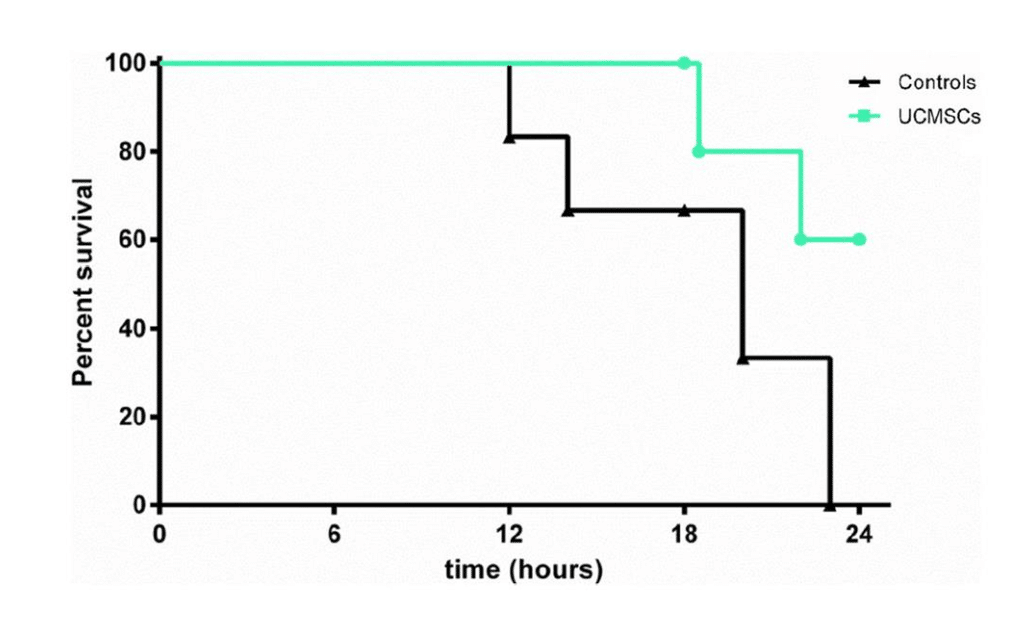
› All the untreated pigs (control group) died within 24h
› 60% of the treated animals with WJ-MSC survived
› n=12
GOOD LUNG PROTECTION
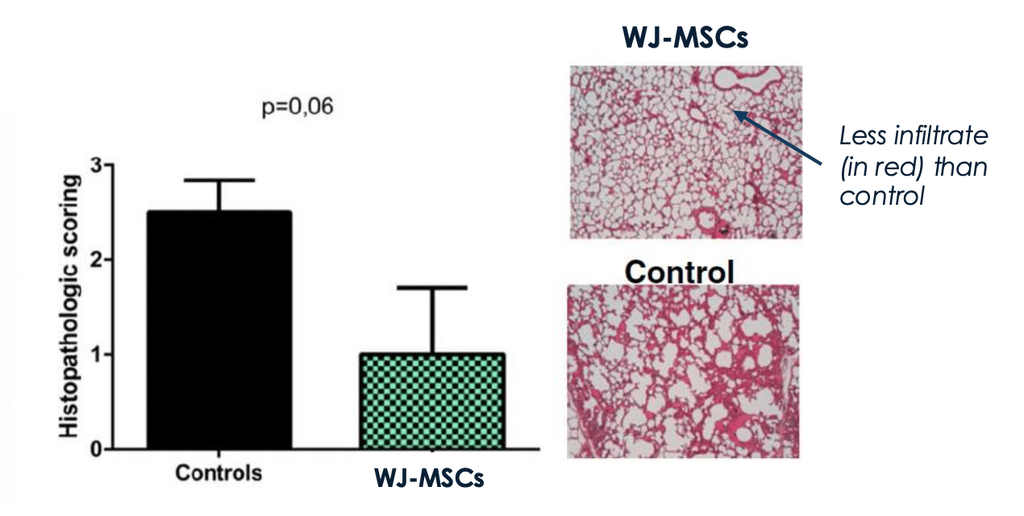
› Histological score:
A score of 0 > absence of anomaly in lungs
A score of 3 > severe anomalies
Septic choc pig model
Laroye et al. 2019

Added to antibiotics in rabbits, WhartSep® doubles survival while enhancing bacterial clearance and protecting the lungs
IMPROVED SURVIVAL RATE
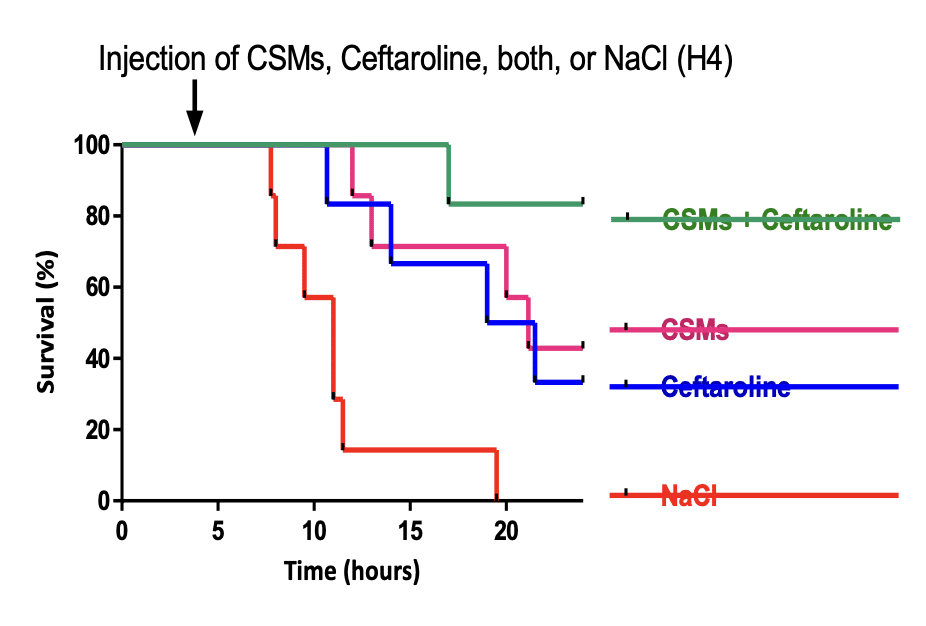
› Improved survival in rabbits receiving standalone WJ-MSC
› Enhanced survival with WJ-MSC in combination with antibiotics
› n=28
HIGH BACTERIAL CLEARANCE
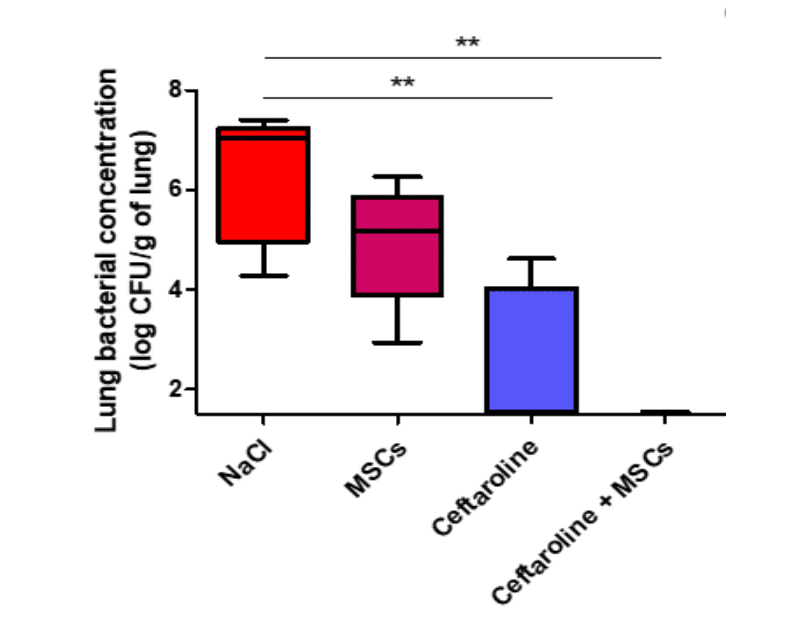
› WJ-MSCs enhance significantly the bacterial clearance
LOWER INFLAMMATION IN LUNGS
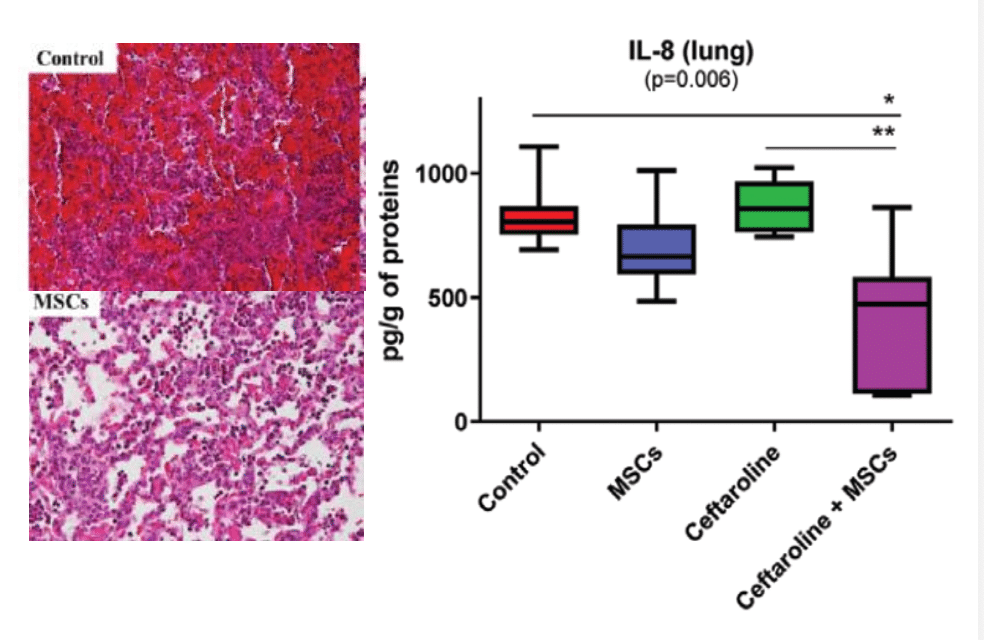
› Improved lung injury with MSC treatment
› Significant decrease of IL-8 (inflammation marker) within the alveolar space
Pneumonia rabbit model
Blot et al. 2022
Partners
R&D


Support



Labels